
Senior Dog Mobility
How to Stop a Senior Dog Slipping on Hardwood Floors
Start with the feet, then cover the few paths your dog actually walks. Most homes need three or four rugs, not new floors.
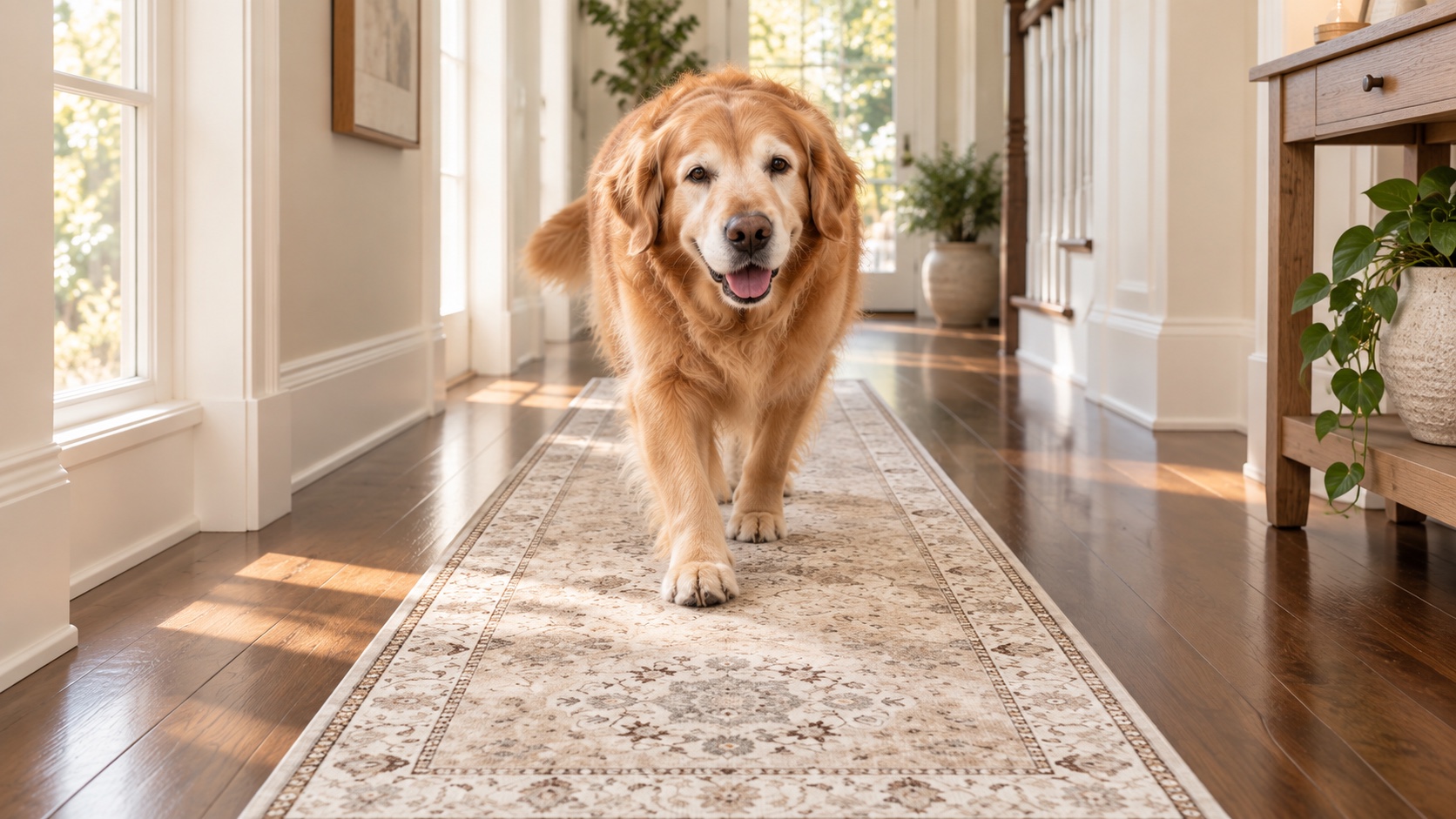
Start with the feet, because that is where grip is lost. Long nails tip a dog back onto its heels and hit the floor before the paw pads do, so keep them short enough that you don't hear clicking on hardwood. Trim the fur between the pads too, since it covers the pads like a slipper. Paw pads also dry out with age, and a paw balm or grip wax can help a little. Next, watch your dog for a day and note where it actually walks and stands: bed to water bowl, the hallway, the spot in front of the couch, the top and bottom of any steps, and the patch where it gets up after a nap. Cover those paths with washable runner rugs that have a rubber backing. Put a felt-and-rubber rug pad under any area rug that slides, because a rug that shifts is worse than bare floor. Getting up is when most falls happen, so the bed should sit on a rug and never on bare hardwood. Toe grips or dog socks with rubber soles help some dogs, but plenty of dogs hate them, so try them at home for short stretches first. Skip shiny floor polish, and wipe up water around the bowls. If slipping starts suddenly, or one leg is giving way, see your vet. Slipping can be a sign of pain or weakness that needs treatment, not only a floor problem.
The short version
Trim the nails and the fur between the pads first, then lay rubber-backed runners on the three or four paths your dog uses every day, and put a rug pad under every area rug. Our non-slip flooring picks cover runners, pads and grips that stay put on hardwood.
Related notes
Non-Slip Flooring Solutions for Senior Dogs
Hardwood and tile are often the real reason a stiff dog looks afraid to walk across the room.
Read the note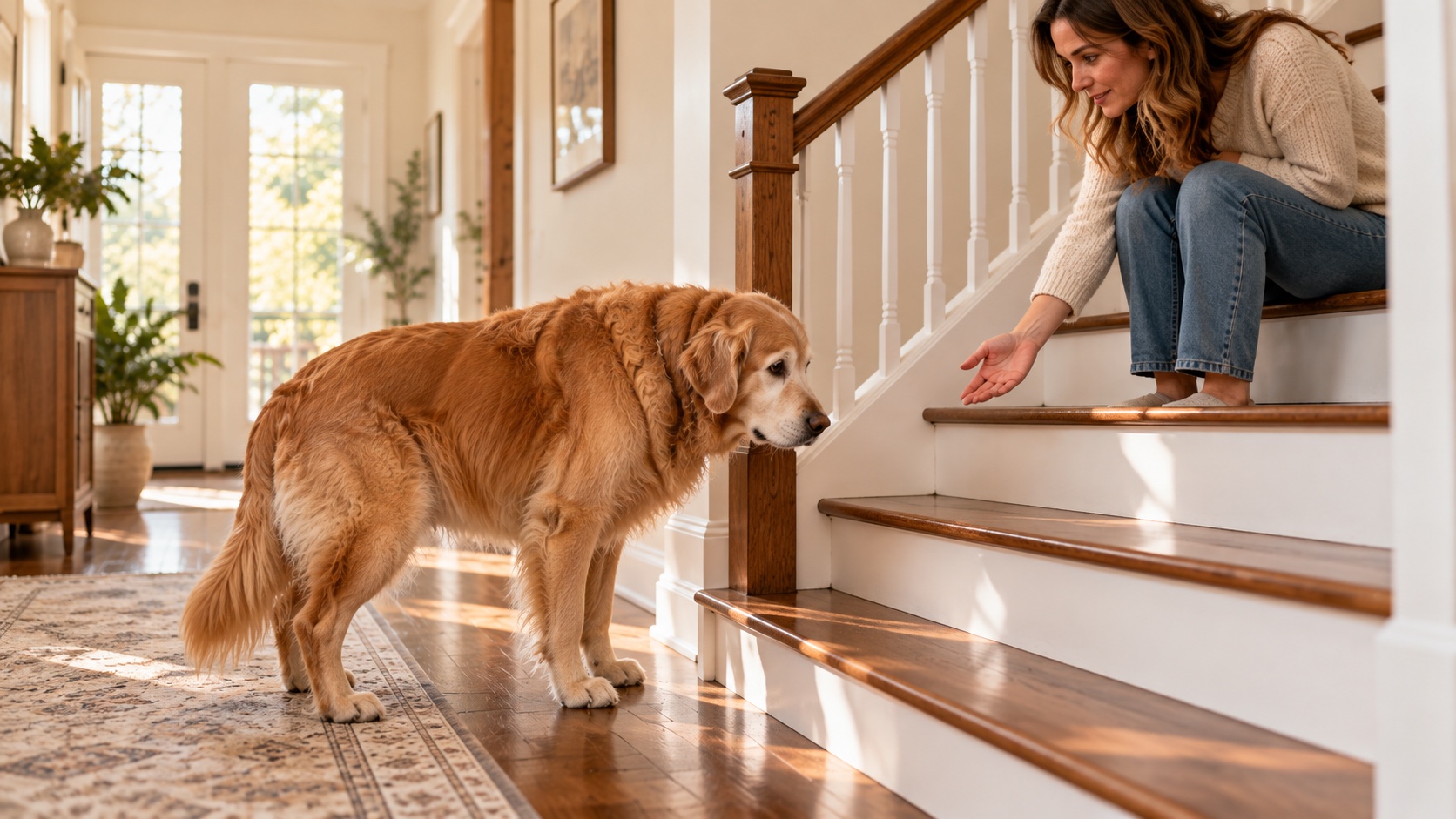
Signs Your Dog Needs a Mobility Aid
The early signals owners usually miss, and what to reach for once you’ve noticed them.
Read the note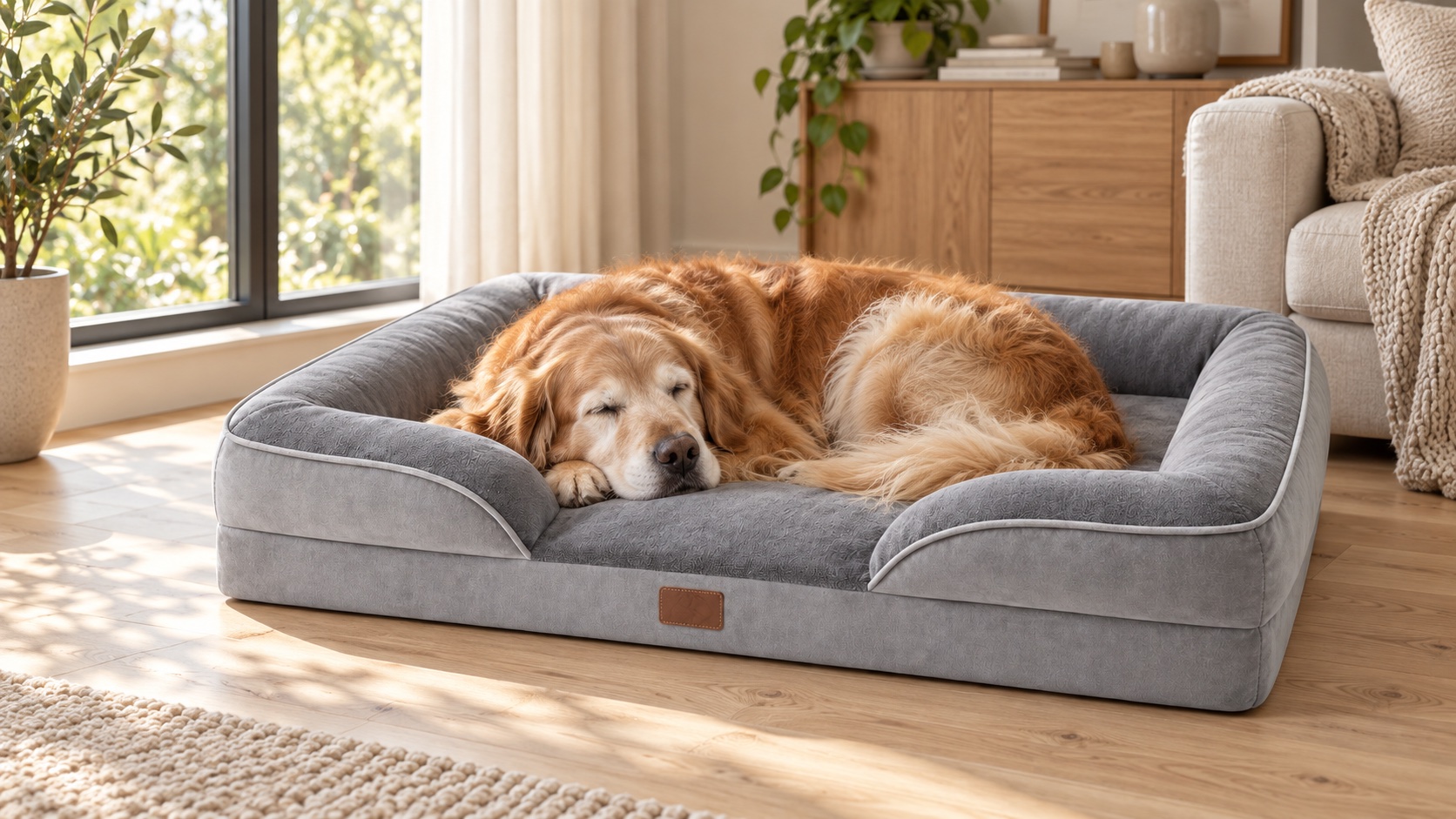
Orthopedic Dog Beds Actually Worth It for Senior Joints
Real foam thickness, a cover you can wash weekly, and a size chart you can actually trust.
Read the note